
I don’t attach the Goo Goo Dolls to one night in my life. They’ve been in the passenger seat since a 90s CD compilation handed me “We Are the Normal.”
There are bands I associate with moments.
Jimmy Eat World will always bring me back to 9/11.
Third Eye Blind can drop me into the strange freedom of graduating college.
Big Head Todd & The Monsters?
There was that kidney stone incident.
But the Goo Goo Dolls are different.
I don’t associate them with a moment because they’ve been part of all of them. They have been riding shotgun for more than 30 years.
My passenger.
My ride or die.
If you really want to understand me, you probably have to get to know the Goo Goo Dolls first.
We Are the Normal
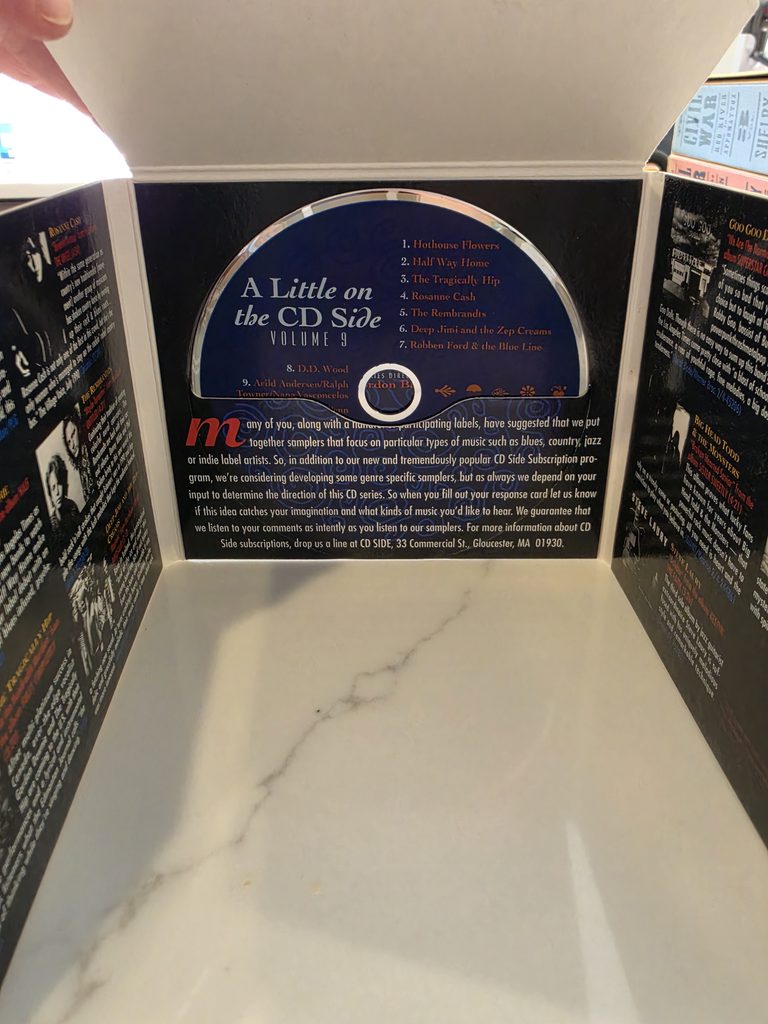
I first heard the Goo Goo Dolls on a compilation CD called A Little on the CD Side Vol. 9, put out by Musician Magazine.
Remember compilation CDs?
For the price of one magazine, or perhaps by filling out some form and mailing away a check, you could be introduced to 15 bands you had never heard of and maybe discover one that would change your life.
That particular disc did pretty well for me. It introduced me to Hothouse Flowers and The Tragically Hip.
And then there was “We Are the Normal.”
Something about that song spoke to me immediately.
At the time, I knew nothing about The Replacements. Paul Westerberg meant nothing to me. Years later, I would learn that Westerberg was one of John Rzeznik’s musical north stars and had actually collaborated on “We Are the Normal.”
That’s the fun part about discovering music before the Internet told you what you were supposed to know about it.
I didn’t know the influences. I didn’t know the backstory. I didn’t know if the Goo Goo Dolls were cool. I just knew I liked the fucking song.
That song led me to Superstar Car Wash, an album I would play from beginning to end again and again.
It just clicked.
There was something rough around the edges about the band, but the hooks were already there. You could almost hear them figuring out what they were capable of becoming.
Then came A Boy Named Goo.
And somehow it was just as good.
Maybe better.

The Track 7 Theory
In April 1995, I got my first new car.
A black Honda Civic coupe.
The Civic had an aftermarket 10-disc CD changer mounted in the trunk, which at the time felt like impossible technology.
You wanted to change a CD?
Pull over. Pop the trunk. Open the changer. Remove the magazine. Swap the discs.
Kids today would stage a fucking revolt.
I loved it.
My sister had given me A Boy Named Goo as a gift, at my request, and I knew exactly what song would christen the Civic.
“Only One.”
Track 7.
That became the first song I ever played in my first car.
It also helped launch what would become Drew’s Track 7 Theory, my completely unscientific belief that the seventh track on a great album is often the buried gem.
Years later, I would pick up the Goo Goo Dolls’ 1990 album Hold Me Up on cassette at Mr. Cheapo’s in Mineola.
“Just the Way You Are” offered a great early taste of what the band would eventually become.
And sitting there at Track 7?
“Never Take the Place of Your Man.”
Theory confirmed.
I still laugh when I hear it.
The colorful cover of Hold Me Up was almost deceptive. So was the stupid band name.
Maybe that’s part of the charm.

When Everybody Else Found My Band
Nobody was happier than me when “Iris” took off.
The Goo Goo Dolls recorded it for the City of Angels soundtrack in 1998 and suddenly this band I had spent years defending was everywhere.
Everywhere.
I hated the video.
Still do.
But the success of that song somehow validated me.
Which makes absolutely no sense.
So when the rocket ship finally launched, a tiny part of me wanted to turn to everyone who had rolled their eyes at my Goo Goo Dolls obsession and say: TOLD YA!
Defending the Goos was probably never really about them. It was practice at defending the parts that make me, unmistakable me.
I remember John performing on a late-night show around that time. In my head, it was Leno, although that part of the memory has gotten fuzzy.
What I do remember is that he wasn’t particularly good.
A few notes went flat.
Maybe more than a few.
The morning show where I worked as a producer absolutely roasted him the next day.
And since I had never been shy about my Goo fandom, they roasted me by extension.
Fair enough.
What is interesting when I watch John Rzeznik now is how much better he became.
He worked at it.
Vocals. Guitar. Performance. All of it.
There’s something I really respect about that.
Some people are handed gifts that arrive fully assembled.
With the Goos, you could see the work.
Baseball and the Goos in 1996
I often think of 1996 as one of the best years of my life.
I was sitting in the bleachers when the Yankees won their first World Series championship since 1978.
And the Goo Goo Dolls recorded a fast alternative-rock version of “Take Me Out to the Ball Game” that Major League Baseball used on ESPN.
Baseball and the Goo Goo Dolls?
Come on.
I was in heaven.
It was also the year I started dating the woman who would become my wife. Conveniently, she liked the Goo Goo Dolls too.
VH1 Storytellers, 2002: Where’s Johnny?
In the spring of 2002, VH1 filmed an episode of Storytellers with the Goo Goo Dolls at Sony Music Studios in New York City.
At this point, I worked for Viacom.
Throughout my years working around television and music, I almost never cashed in favors for tickets. It always felt weird to me.
Yet somehow, tickets to this show made their way into my hands.
I honestly don’t remember how.
I do remember who I brought.
My sister.
Maybe this was repayment for A Boy Named Goo.

The room was intimate, the kind of setting where there wasn’t much separation between the band and the audience.
At one point, John started playing “Sympathy.”
And he fell apart. He forgot words. He struggled with the guitar. For a moment, the rock star disappeared. There was just a guy standing in front of a room full of people trying to get through his own song.
My respect for him multiplied.
I’d seen plenty of polished performances by then. Working in television has a way of showing you how carefully manufactured spontaneity can be.
This wasn’t that.
He was vulnerable.
And I believed him.
After “Iris”: Gutterflower and the Long Way Down
By 2002, the Goo Goo Dolls had experienced something few bands ever do.
They had gone from successful to enormous.
Dizzy Up the Girl sold more than four million copies in the United States.
“Iris.” “Slide.” “Black Balloon.” “Broadway.”
Where the hell do you go from there?
Down, mostly.
Four years later, Gutterflower sold somewhere around 700,000 copies.
That’s one hell of a drop.
To be fair, the music industry itself was beginning to collapse as downloading and digital music started beating the shit out of CD sales.
But I didn’t care about the numbers.
I loved Gutterflower.
“Big Machine” grabbed me from the start.
“Here Is Gone” kept me there.
And “Sympathy” found its permanent home.
Maybe that’s the benefit of genuinely loving a band.
You stop worrying about whether everybody else still does.
More Than a January Friend: Why Robby Takac Matters”
One of my favorite parts of any Goo Goo Dolls album is when Robby Takac gets a song.
You always know when Robby has entered the building.
His energy is infectious. His voice is completely his own. Even when he’s singing backup, you know he’s there.

The songs feel different from John’s songs because they are different.
And that’s good.
I’ve always thought there is something a little Bon Jovi and Richie Sambora about John and Robby.
Not musically.
Not the relationship.
They don’t necessarily need each other to exist as people or musicians.
But damn, I’m glad they stuck together for a distinctive sound.
They rode the waves. They survived the weirdness that comes when one member of a band becomes the face on every magazine cover. They kept going.
At Mohegan Sun in September 2026, there was a moment when John was playing a guitar solo during Broadway, and Robby stood behind him watching.
Smiling.
It looked like pride.
Like a father or brother or really good friend watching someone they had seen struggle, grow, and put in a ridiculous amount of work.
Was Robby actually thinking any of that?
I have no idea.
Maybe he was thinking about what he wanted to eat after the show.
But that’s what I saw.
And music is allowed to be about what we see in it.

John Rzeznik Is a Real One
Something about John Rzeznik has always appealed to me.
He has a little bit of that Nelson brother thing I seem to be drawn to.
Macho, but not.
A rocker with great hair who wasn’t afraid to be glossy.
Heart firmly attached to sleeve.
You never got the sense that the sensitivity was bullshit.
I actually got to find that out for myself once.
Working at VH1, I saw plenty of famous people come and go. I never cared much. I didn’t ask for pictures. I didn’t ask for autographs. I usually didn’t make much small talk unless there was a reason to.
But one day I found myself alone with John in the studio, waiting for the host to come in and record an interview.
So I asked him who his hero was.
Mostly because I wanted an opening to tell him that he was one of mine.
It is probably the most fanboy thing I ever did in all my years working around celebrities.
He could not have been nicer.
At some point, he told me to go listen to “Bastards of Young” by The Replacements, one of his favorite songs.
So I did.
And I still do.
That little exchange probably lasted only a few minutes, but it confirmed something I had already suspected about him. There was no rock-star bullshit. No sense that he was doing me a favor by talking to me.
I saw enough famous musicians during those years to tell you plenty of stories about people who disappointed me.
I’d rather tell this one.
John Rzeznik is a real one.
The Goo Goo Dolls were underdogs. There wasn’t mommy and daddy money building a runway underneath them. They didn’t arrive looking like a band genetically engineered to become stars.
They worked for it. They are still working for it.
Better Days
I’m not sure John Rzeznik gets enough credit as a songwriter.
Think about the span of this career.
Almost 40 years of songs.
And every once in a while, one escapes the normal boundaries of the Goo Goo Dolls catalog.
“Better Days” has basically become a Christmas song.
Their July 4, 2004 hometown show in Buffalo, played through a ridiculous rainstorm, has become part of the band’s mythology.
“Iris” has outlived the movie it was written for by several lifetimes.
They are more culturally embedded than I think most people realize.
And the newer stuff isn’t simply filler for the three songs everybody came to hear.
I still think someone is going to discover 2013’s “Last Hot Night” and license the hell out of it someday.
“Over and Over” gets me too, especially that idea of being old enough to know better but still young enough to live again.
There is a Goo Goo Dolls song for almost every room I’ve occupied in my life.
No, My Wife Didn’t Drag Me Here
I’ve been to Goo Goo Dolls shows where John jokes about all the husbands dragged there by their wives.
Not me.
It’s the opposite.
My wife loves the Goo Goo Dolls.
But that’s because of me!
Sorry, babe.
Over the years, my Goo fandom became contagious.
My sister was there early.
My wife came along for the ride.
In 2006, there was Jones Beach with Counting Crows.
In 2013, Matchbox Twenty and the Goos, surrounded by the ladies of my life.
Then came Mohegan Sun in September 2026.
This time I brought my 14-year-old son.
It was a perfect night.
Almost.
I could have done without the black balloons.

After Black Balloon, which was the fifth song they played, giant black/white balloons bounced around the arena while a handful of grown-ass men became completely obsessed with punching them into the air.
One guy would smack a balloon, watch it float 25 feet away, and stare longingly as if he couldn’t wait to tell the guys tomorrow that he was the one who started it all.
This went on for the rest of the show. Grown men amazed by balloons. WTF.
The Soundtrack of My Life
The funny thing is that the Goo Goo Dolls aren’t attached to my highs and lows.
They’re attached to me.
That’s different.
I defended liking them when the world was a harsher place about these things.
There was a time when musical taste was practically a blood sport. You couldn’t just like something. Every band placed you into some ridiculous labeled bucket.
Too commercial. Too soft. Too pretty. Sellouts.
Whatever.
I liked the Goo Goo Dolls as a teenager.
I liked them when “Iris” made it impossible for anyone to pretend they didn’t exist.
I liked them when the album sales dropped.
I like them now.
I’ll stand by them for all my days.
Their music is comfort for my ears and my soul.
Maybe they’ll never get the respect they deserve.
It doesn’t matter.
Songs they wrote decades ago are finding people who weren’t alive when those songs were released.
Will they ever have another “Iris”?
Who needs one?
At Mohegan, John seemed unusually comfortable onstage. Maybe comfortable isn’t even the right word.
Free.
Watching him own that stage after all these years felt fresh to me.
Maybe at this point in his life, he’s as comfortable as he’s capable of being.
And maybe that’s good enough.
I’d like to think John and I are kindred spirits in one small way. We both seem capable of turning anxiety and imposter syndrome into fuel.
You keep moving.
You keep working.
Eventually you look around and realize you didn’t just survive. Somewhere along the way, happiness started growing around you.
Maybe that’s projection.
I’m okay with that.
Because we forge connections through music that don’t always make logical sense.
A song gets inside you when you’re 17 and somehow knows how to speak to you at 50.
A band with a ridiculous name becomes part of your family.
Your sister gives you the CD, you play it in your first car, and years later you bring your wife to shows.
Then one night you look over and confetti is falling, and your 14-year-old son is singing every word to “Iris,” a song you’ve carried around for almost 30 years.
And you realize the band wasn’t the soundtrack to one moment.
They were there for all of it.
Still are.
So if you want to understand me, get to know the Goo Goo Dolls.
I’ll be the guy in the crowd singing along.
Just please keep the fucking balloons away from me.

“Scars are souvenirs you never lose. The past is never far.”


Leave a Reply