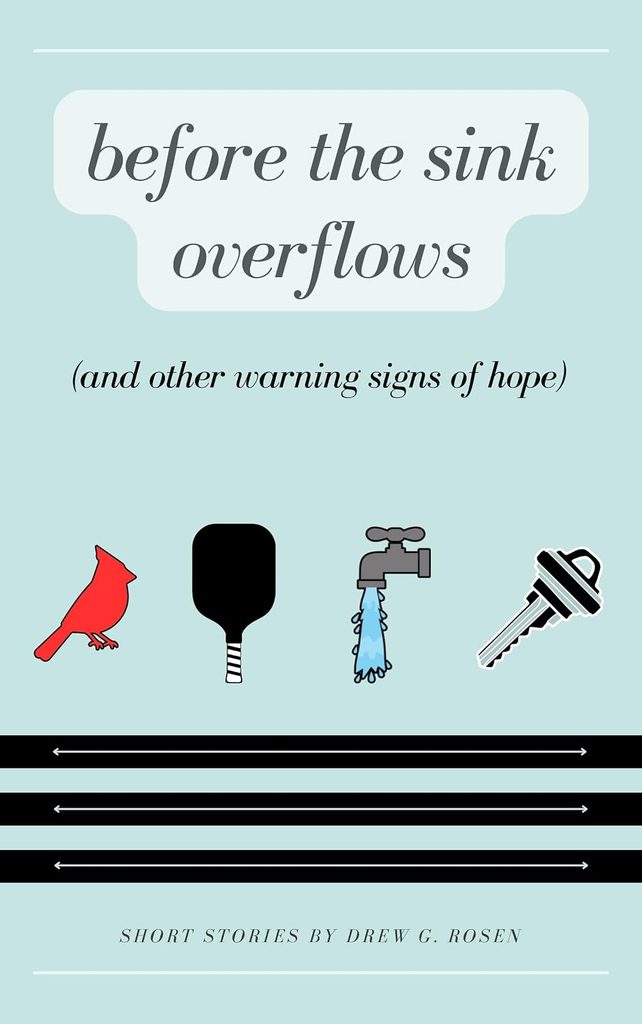
One year ago today, I published Before the Sink Overflows (and Other Warning Signs of Hope), my first collection of short fiction.
It was scary. Exhilarating. And, at times, a little ridiculous.
I’d spent months creating characters, inventing conversations, and obsessing over sentences that nobody had asked me to write. Then, suddenly, I was putting those stories into the world for complete strangers to read.
There’s something uniquely terrifying about that last part.
I wasn’t sure what to expect. But I knew why I’d started writing again.
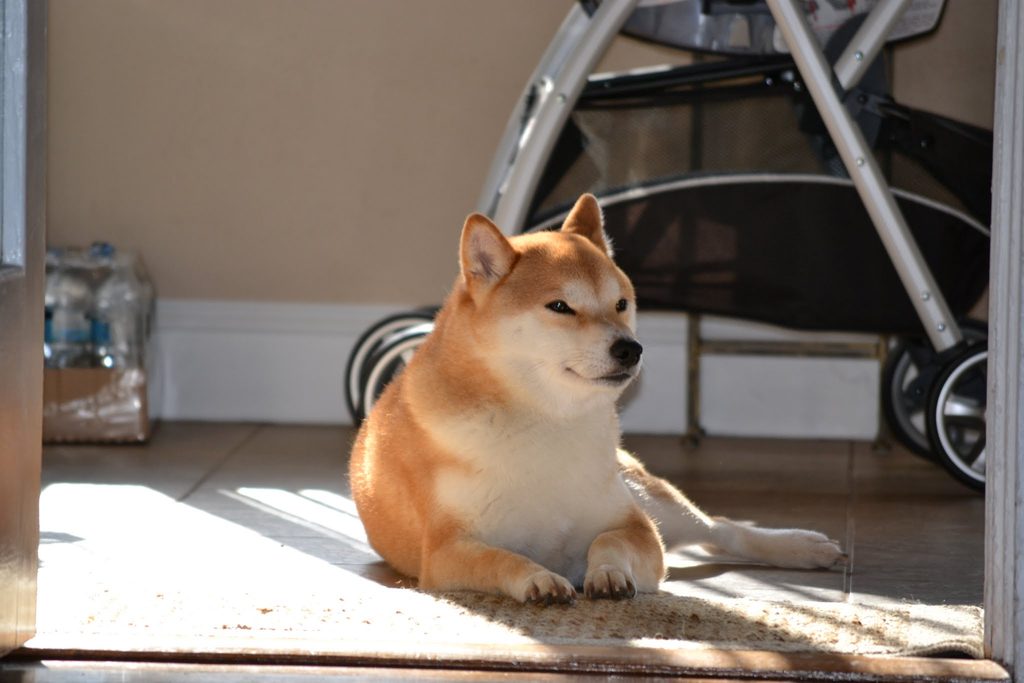
Kenji.
Our Shiba Inu had been part of our family for so long that life without him felt like a different life altogether. When we lost him nearly two years ago, I found myself with an unfamiliar emptiness. The routines were gone. The sounds were gone. And I had all this time that used to belong to him.
Writing helped fill some of that space.
Not that it made the grief disappear.
Here’s something I’ve learned: Grief isn’t linear.
Maybe that’s part of why I’ve always been drawn to the small, ordinary things people do. The seemingly insignificant habits, gestures, and conversations that quietly tell us so much about who we are.
I’ve come to believe there’s a lot of life hiding in those moments. Fiction has given me an excuse to pay a little closer attention.
The story I’m sharing below, Feeding the Silence, is one of the more personal pieces in my collection. It’s fiction. Lincoln isn’t Kenji, and his family isn’t mine. But the emotions behind it come from somewhere very real.
To celebrate one year of putting my fiction out into the world, I wanted to share it in its entirety.
I hope it means something to you.
Feeding the Silence
By Drew G. Rosen
My dog died, so I started feeding the birds.
It began with a long plastic green tube filled with seeds hanging from a rusty metal hook in our tiny garden.
Once a day turned into three, which led to me hunching over my laptop with six browser tabs open, researching bird cams as cold April rain drummed on the roof. There’s even one that promises AI technology smart enough to identify even the rarest of avian wonders.
I tried to find bits and pieces of my four-legged bestie in each winged visit, but quickly learned that there was no message, no sign. The birds were just hungry.
The cardinals always come first. Followed by small brown wrens. The light gray mourning doves tend to make a late-afternoon visit, while the majestic blue jays are as unpredictable as the squirrels that regularly crash the feeding frenzy.
Now that Lincoln is gone, there are words and tears, and birds: but in the end, there is nothing. Just memories that masquerade as reality, barely filling the void.
Every moment that used to belong to Lincoln—mornings, evenings, walks, mealtimes—now echoes with silence, replaced by the flutter of wings and indistinguishable chirps.
Lincoln, aka Love Puff, aka Blackie, aka Velveteen Dream, aka FishMouth, aka SnuggleCrow was mine and Sara’s long before Kaitlyn and Ashley were born.
He was listed as a boxador—a boxer and labrador mix—though Miss Nees, the shelter owner, told us that identifying his breed was a guessing game. It didn’t matter to us.
His black fur glistened in the sunlight as we signed the paperwork and the way his ears flopped over his face made us forget about the five references we needed to provide. We had at first whined at the tediousness of the whole process, but after meeting Lincoln, we would have provided seven references if needed.
Lincoln was known as Giblets at the time (we never asked why) and had brown eyes that burrowed into your soul. We couldn’t wait to bring this mutt back to our house to make it a home.
Our ability to keep him alive, especially during those first few weeks, validated our hypothesis that two people with full hearts and decent brains could care for living things beyond green plants, which, frankly, we were never great at to begin with. But with Lincoln, we thrived.
Training duties and daily walks became my responsibilities. Clean-ups and feedings were taken on by Sara.
We both relished our new duties, neither of us saying what we both knew: it was our unspoken trial run to be parents, and we took every opportunity to spoil our new addition.
I ran home each day during lunch, a short but maddening stop-light-ridden drive, to let Lincoln stretch his legs outside and do his business. My brother Lou told me it was overkill, but only I saw how Lincoln’s puppy posture changed when the tires crunched over the driveway gravel. And without fail, when I walked through the door, Lincoln’s greeting made my life complete—every time, like the first time.
In those early months, a day couldn’t pass without Sara ordering a bone, a toy, a supplement, an outfit, or just a good old-fashioned tennis ball for our boy.
It didn’t take long for Lincoln to become my conversational companion. I knew he didn’t understand, but that didn’t stop me from sharing my joys, my annoyances, and my fears. For his sake, I hope those thick velvet curtain ears protected him from my woes: complaints about fertility; money problems; a job devoid of color—the poor pup received it all, his tail always wagging.
I chased off a squirrel today, banging a broom against the window. That used to be Lincoln’s job, one he handled with more grace than I can muster.
Sara says I’m trying too hard with the birds, that I’m looking for something that isn’t there. I remind her that the living room doesn’t need to be vacuumed…again.
Grief hangs heavy but quietly. It splits us into separate parts of the house so that we may cope in our own way, not one voice raised. Instead, I stare at the yard and wait for birds to come and go. Sara sweeps the floors. We know that neither one of us is wrong.
When Kaitlyn was born, Lincoln had spent his entire life as the center of our universe. We worried he’d be jealous or confused, or worse—resentful. But he took to her instantly, curling up beside the Pack n’ Play like it was his duty. He sniffed her head once, sneezed, and looked at me like, Okay, I’ll keep watch.
Through the 2 a.m. feedings and the 6 a.m. arguments about formula and finances, Lincoln stayed curled up at our feet. Though he couldn’t fix anything, his presence alone made it all feel survivable.
By the time Ashley came along, Lincoln’s face had gone salt-and-pepper, and his joints clicked when he stood up, but he still got himself to the door every morning to see the girls off to school. That was the thing about Lincoln. Even when it hurt, he showed up.
The last couple of years were kind and cruel, an opportunity to be grateful for every minute together while watching the inevitable unfold. Long walks through the neighborhood became shorter, eventually shrinking to tiny victories for just getting outside. The fleeting gazes of pity from neighbors hit like bullets.
I pre-mourned like it was my job, trying to pay the pain in advance—as if borrowing tomorrow’s tears could soften the blow. Finally, it happened. One day I came home and found Lincoln in the wrong corner in the wrong room lying the wrong way, and I knew he was telling me it was the right time.
As Lincoln slipped away, the emptiness slipped in, even as the vet did her best to make the process gentle for us all. My blur of tears was dark, deep, and definitive.
I installed a new bird feeder last week. It’s sturdier, harder for the squirrels to tip, and my feathered friends seem to like it. Robins and sparrows and red-winged blackbirds have joined the fray as if they’ve learned about the upgrade.
I watch them from the window and talk to them. Not because they understand—but because there are some words I still need to say out loud.
There’s More to the Story
Feeding the Silence is one of the stories in my debut collection, Before the Sink Overflows (and Other Warning Signs of Hope).
The collection explores the quieter corners of everyday life through people who are struggling, searching, starting over, or simply trying to make sense of the world around them.
There’s a retired professional wrestler who finds an unexpected second act on a pickleball court. A father forced to confront his past. And a collection of other people whose ordinary lives turn out to be anything but.
Some of the stories are funny. Some are sad. Most land somewhere in between.
Just like life, I suppose.
If you enjoyed Feeding the Silence, I’d love for you to discover the rest.
And if this story reminded you of an animal you’ve loved and lost, feel free to share in the comments.
One year into this fiction adventure, knowing that something I’ve written has connected with another person is still the most rewarding part.
Thanks for reading.


Leave a Reply